
A trailer that is slightly out of alignment does not feel wrong. It tracks fine at speed, the driver has nothing to report, and nobody looks at it until a set of tyres is finished a year early. That is what makes it expensive — it is a fault that hides.
The short answer
For a working commercial vehicle in the UAE, check alignment:
- Every 6 months, or roughly every 50,000–60,000 km, whichever comes first
- Always after chassis, axle or suspension work — no exceptions
- Always after a hard kerb strike, a deep pothole or a speed bump taken loaded
- Immediately if tyre wear goes uneven or the vehicle pulls to one side
Vehicles on rough ground, construction sites or unpaved yards should be checked more often than that. Vehicles that only run smooth highway can go a little longer.
Why after suspension work, always
This is the one that gets skipped, and it is the most important on the list.
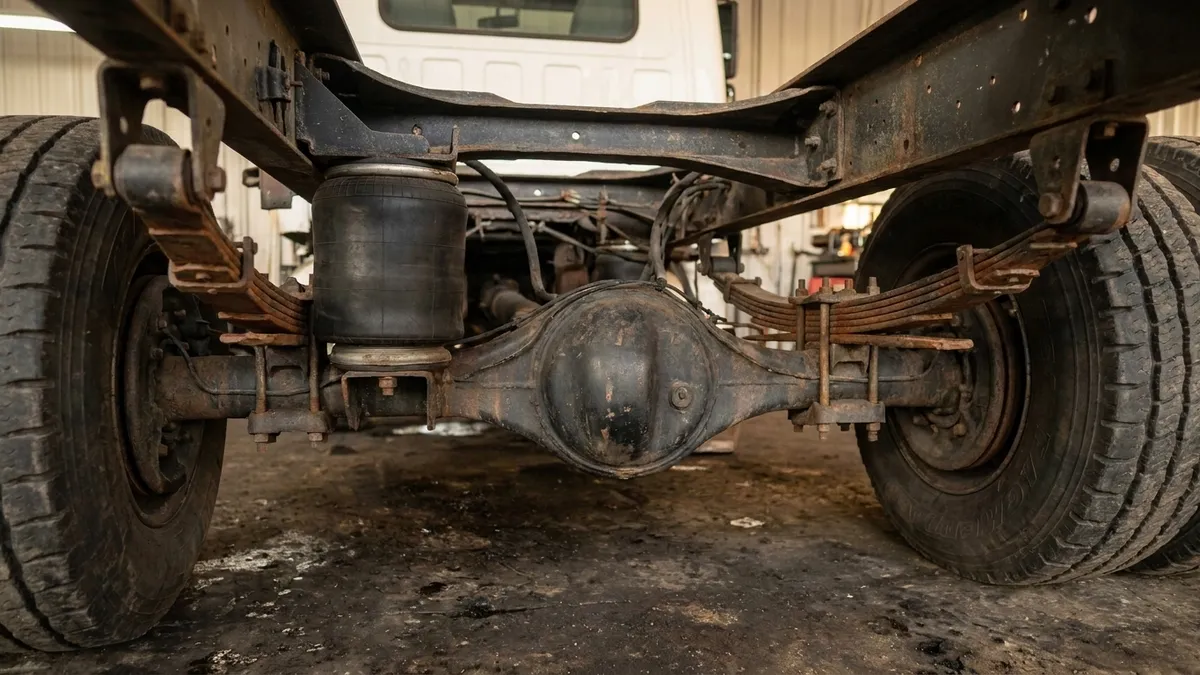
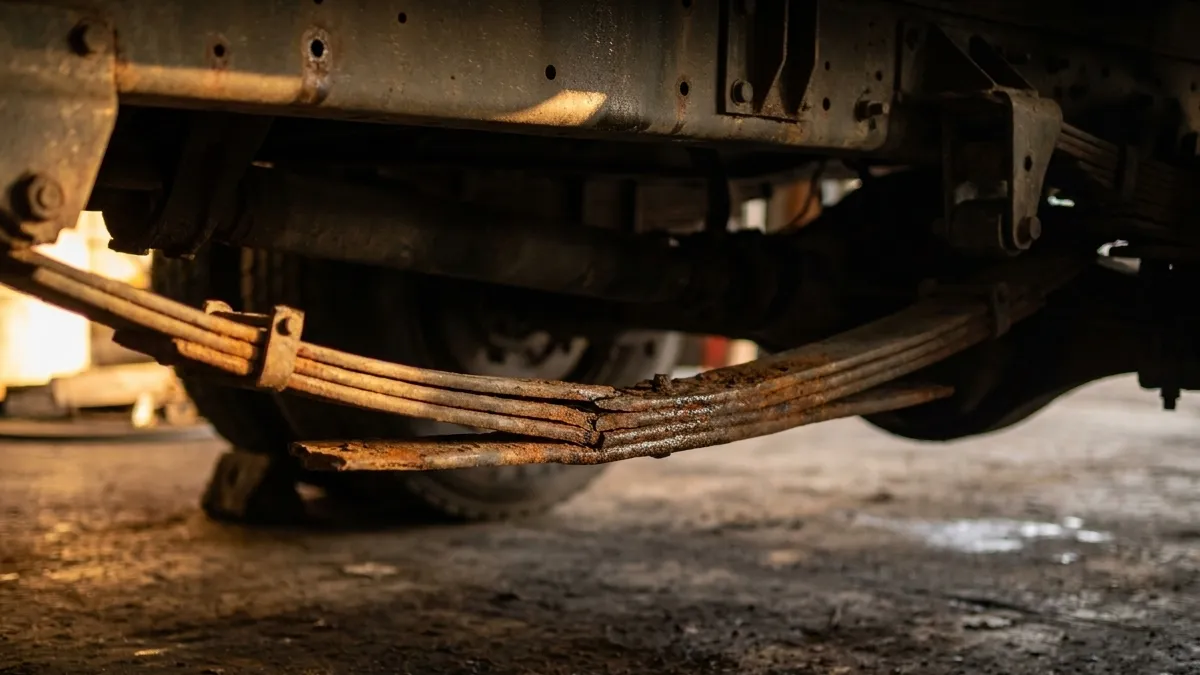
Replacing a leaf spring pack, straightening a chassis, fitting new bushings or changing an axle all move the axle's position relative to the chassis, even slightly. The vehicle leaves the workshop with different geometry from the one it arrived with.
If nobody checks that, the customer pays for a spring job and then pays again for tyres a few months later, and quite reasonably blames the spring. Alignment is part of finishing the job properly, which is why we treat it as part of the work rather than an upsell.
What we actually check
On a heavy vehicle, “alignment” means more than the front wheels:
- Toe — whether the wheels point slightly in or out
- Camber — whether the wheel leans in or out at the top
- Axle squareness — whether each axle sits at ninety degrees to the chassis
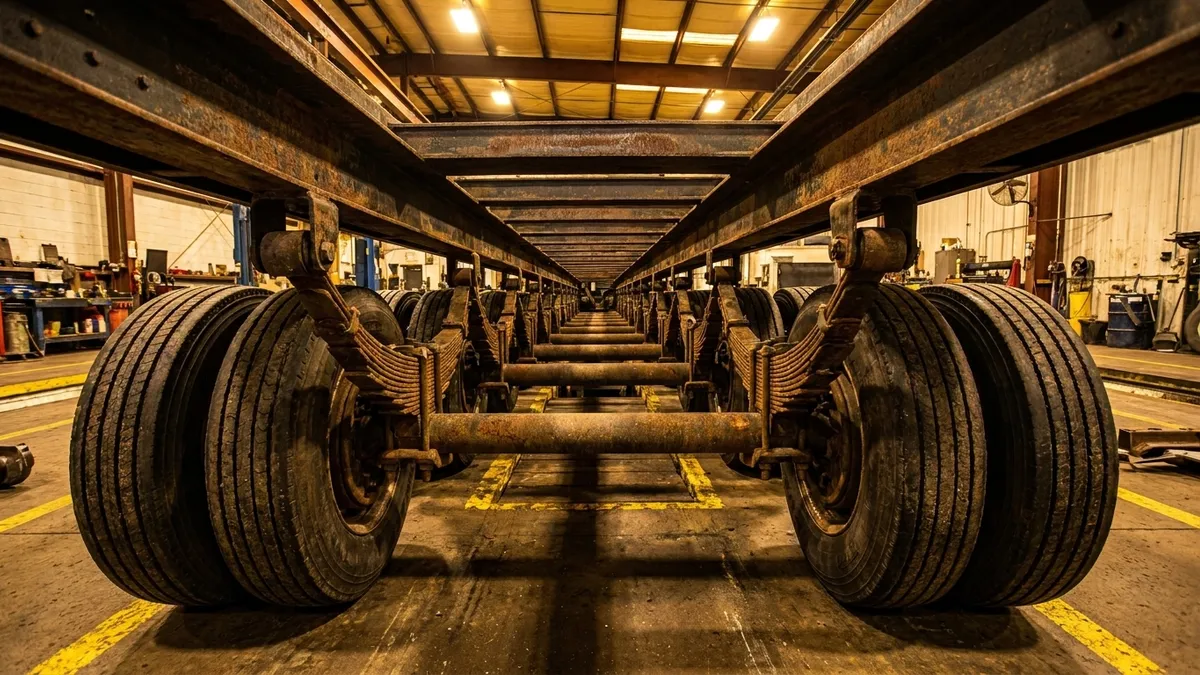
- Axle parallelism — whether the axles are parallel to each other. On a multi-axle trailer this is where the money is lost
- Thrust line — whether the trailer follows the truck straight or crabs slightly sideways
A trailer axle a fraction of a degree out of square drags the tyre sideways on every single kilometre. It never feels like anything from the cab.
Signs you are already overdue
- One shoulder of the tread worn while the rest looks fine
- Feathered edges — smooth one way when you run your hand across, sharp the other
- Tyres on one side of the trailer wearing faster than the other
- The vehicle pulling, or the steering wheel sitting off centre on a straight road
- Tyres simply not lasting as long as they used to on the same routes
Our tyre wear pattern checker will tell you which of these points at alignment and which points at a suspension fault instead.
What it costs to leave it
Misalignment shortens tyre life. How much depends on how far out it is, but a fleet running even moderately misaligned trailers is buying noticeably more tyres than it needs to, plus burning extra fuel dragging rubber sideways.
Put your own numbers into the alignment savings calculator — number of vehicles, tyre price, monthly kilometres — and it will show you the yearly figure for your own fleet rather than a general claim.
Set it on a rota, not on complaints
The fleets that spend least on tyres are not the ones that react fastest to problems. They are the ones that check on a schedule, so problems get found before the rubber is gone.
We set up rota alignment programmes for transport companies in Dubai — a few vehicles at a time, worked around your operating schedule, so nothing comes off the road at short notice. Call +971 50 997 8160 and tell us how many vehicles you run.