
Every operator knows overloading carries a fine. Fewer work out what it costs in springs, chassis rails, tyres and brakes over a year — which, for most fleets, is the bigger number.
The federal weight limits
The maximum permissible gross vehicle weight on UAE roads is set by axle count:
| Number of axles | Maximum gross weight |
|---|---|
| 2 axles | 21 tonnes |
| 3 axles | 34 tonnes |
| 4 axles | 45 tonnes |
| 5 axles | 56 tonnes |
| 6 axles or more | 65 tonnes |
Gross weight means everything — the vehicle, the trailer, the fuel, the driver and the cargo. Individual axle and tandem group limits are set separately from the gross figure.
You can check your own vehicle against this table with our axle load calculator.
The fines
Fines for exceeding the maximum gross weight are charged per tonne over, on a rising scale:
| How far over | Fine |
|---|---|
| Less than 10% | AED 400 per tonne |
| 10% to 20% | AED 500 per tonne |
| More than 20% | AED 600 per tonne, capped at AED 15,000 per trip |
There is a separate fine of AED 1,500 for each individual axle or tandem group found over its limit, and AED 3,000 for exceeding permitted dimensions.
Note what the scale does: a truck 25% over does not pay 25% more than one 5% over. It pays a higher rate on a bigger overage, so the cost rises much faster than the weight does.
What overloading does to the vehicle
The fine is the visible cost. This is the invisible one, and it is the part we see in the workshop every week.
Leaf springs
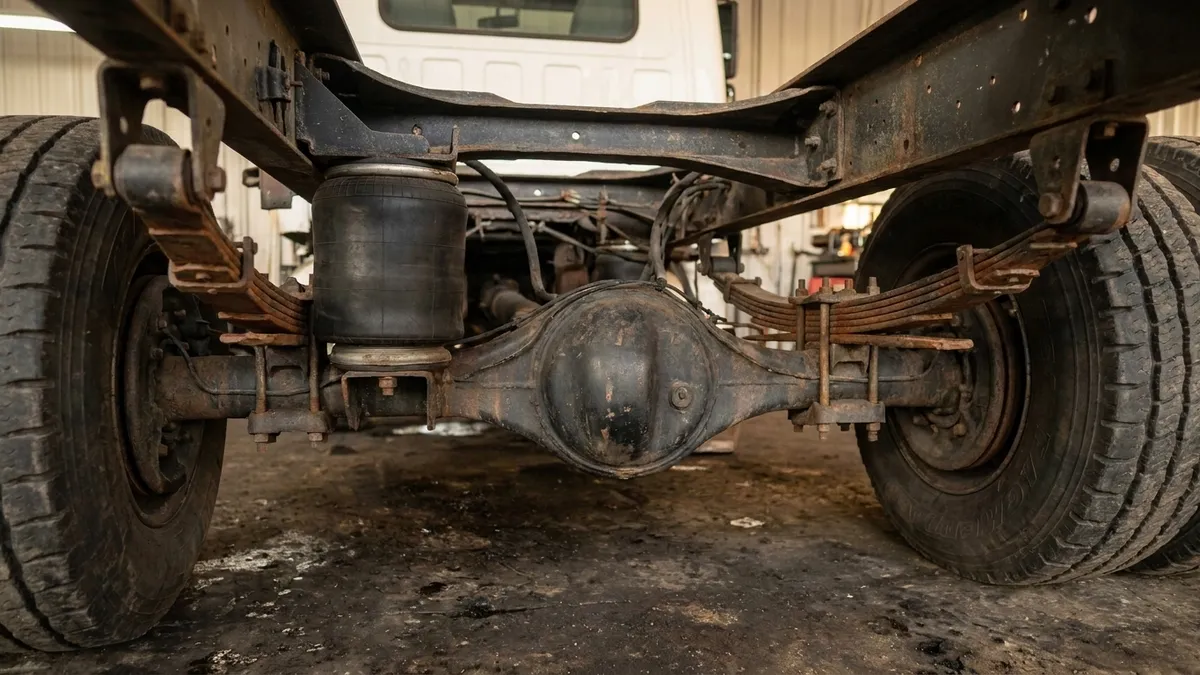
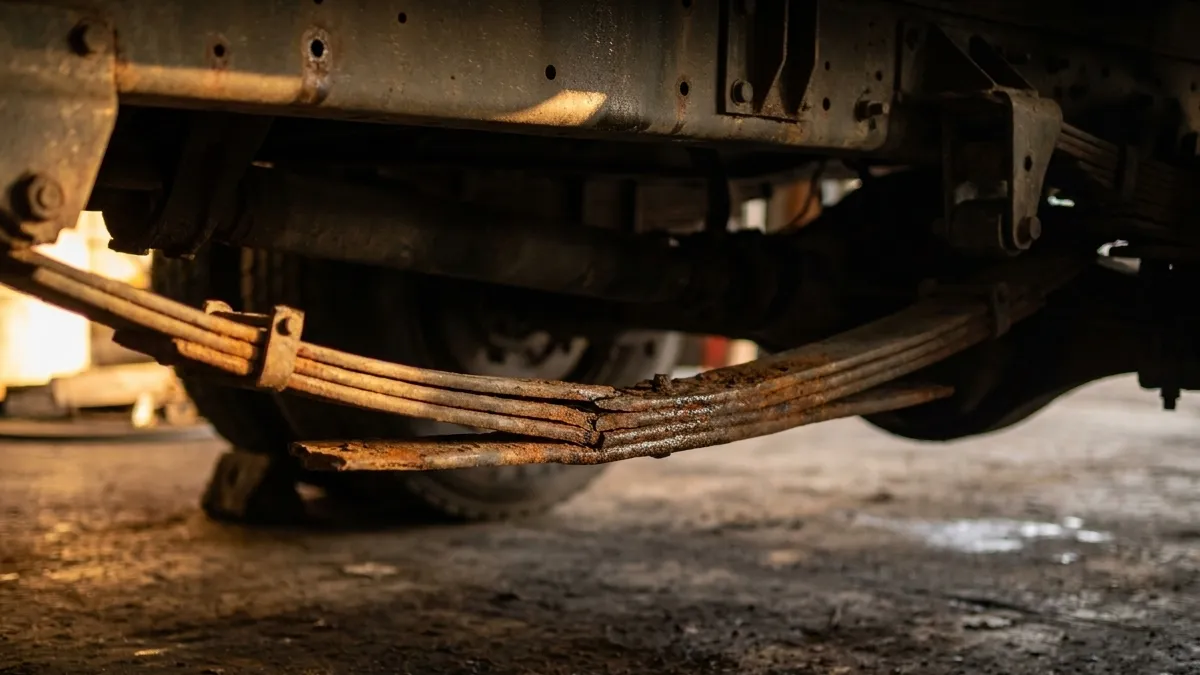
A spring pack is specified for a load range. Run it beyond that regularly and the leaves fatigue, the arch flattens, and individual leaves crack — usually at the centre bolt. Once the pack has gone flat, the axle starts hitting the bump stops, and the shock that should have been absorbed by steel goes straight into the chassis instead.
Chassis rails
That transferred shock is what cracks frames. Cracks start at the cross members and stress points and spread along the rail. A cracked chassis is a far bigger job than a spring, and it is almost always the end result of months of overloading rather than one bad trip.
Tyres
An overloaded tyre runs hot, wears across the shoulders, and is far more likely to fail at speed on a hot road. This is one of the most dangerous consequences and the one that gets the least attention.
Brakes
Every extra tonne is extra stopping distance and more heat in the drums on every stop. On a descent with a loaded trailer that margin matters.
If you regularly need the capacity
Some operators are overloaded because the vehicle is under-specified for the work, not because anyone is cutting corners. There is a legitimate way to deal with that:
- Chassis reinforcement or doubling so the frame handles the loads it actually sees
- Heavy duty leaf spring packs rated for the real working weight rather than the original spec
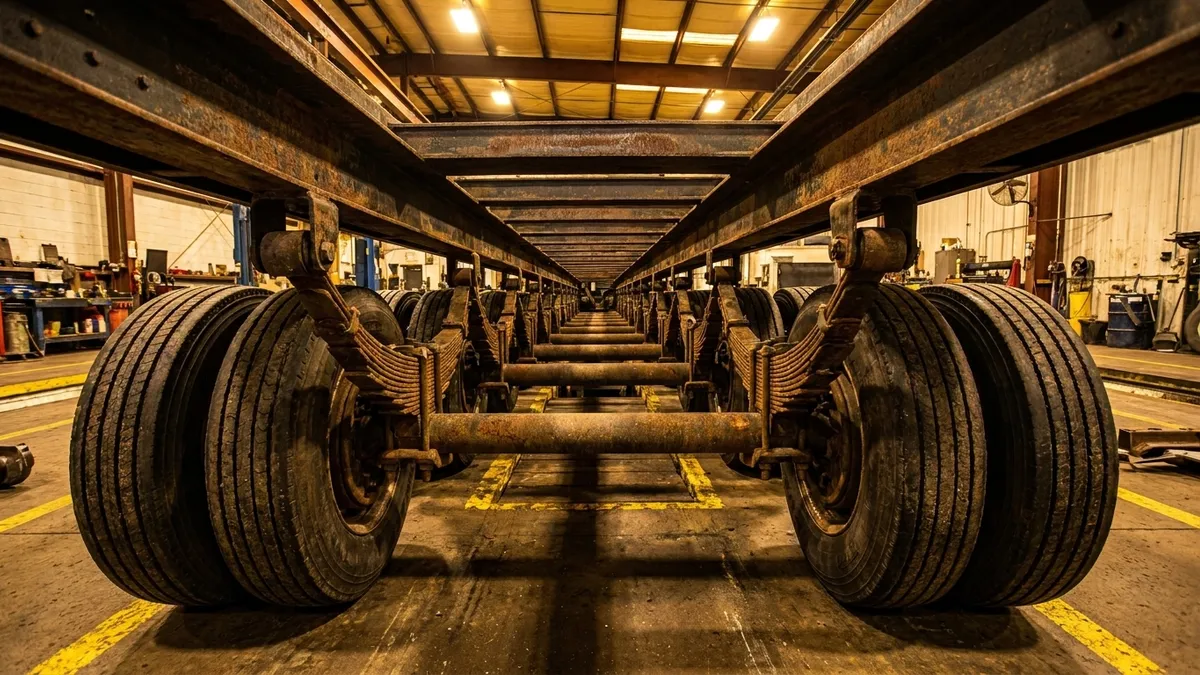
- Adding an axle where the vehicle and the regulations allow it — more axles means a higher legal gross weight
- Air to leaf conversion, since a properly specified leaf pack carries more than an equivalent air setup
None of that is a way around the law. It is a way to make the vehicle capable of doing the work you are already asking it to do, without destroying itself in the process.
Get the vehicle looked at
If your truck sits low, bottoms out over bumps, or goes through springs faster than it should, the suspension is telling you it is working beyond its specification. Bring it in, or call +971 50 997 8160 and describe what it is doing.