
This question comes up in the workshop almost every week, usually from an owner whose air system has just cost him money for the third time. So here is the honest answer, including the parts that do not favour the conversion we sell.
How each one actually works
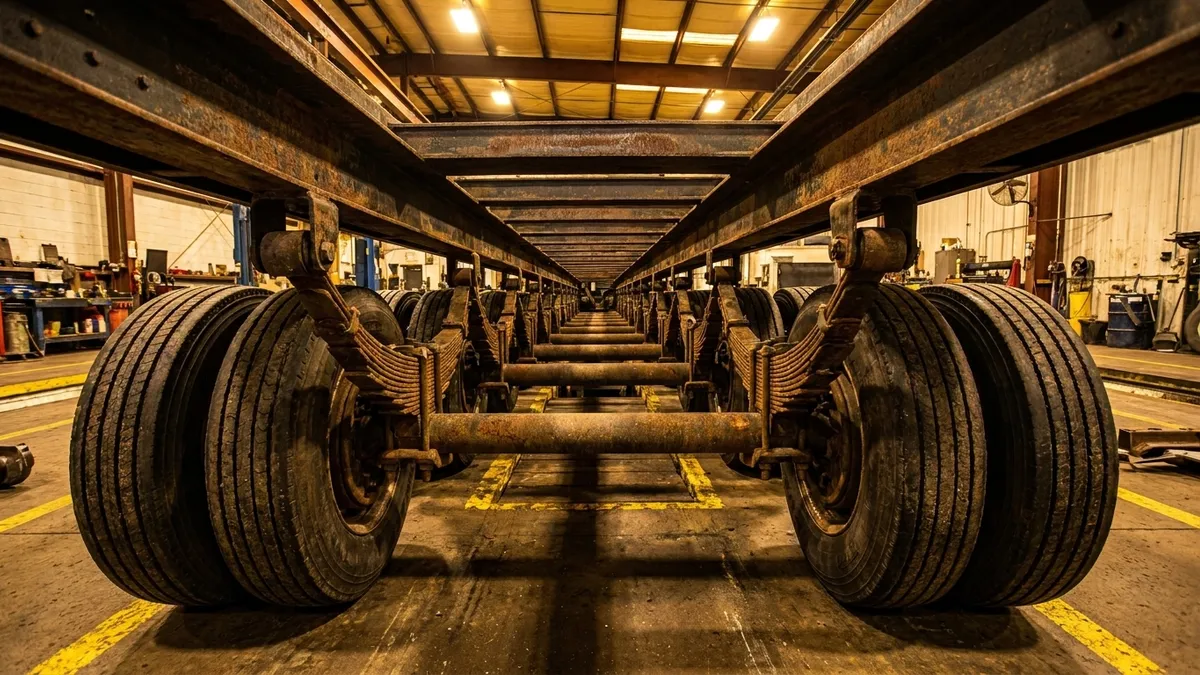
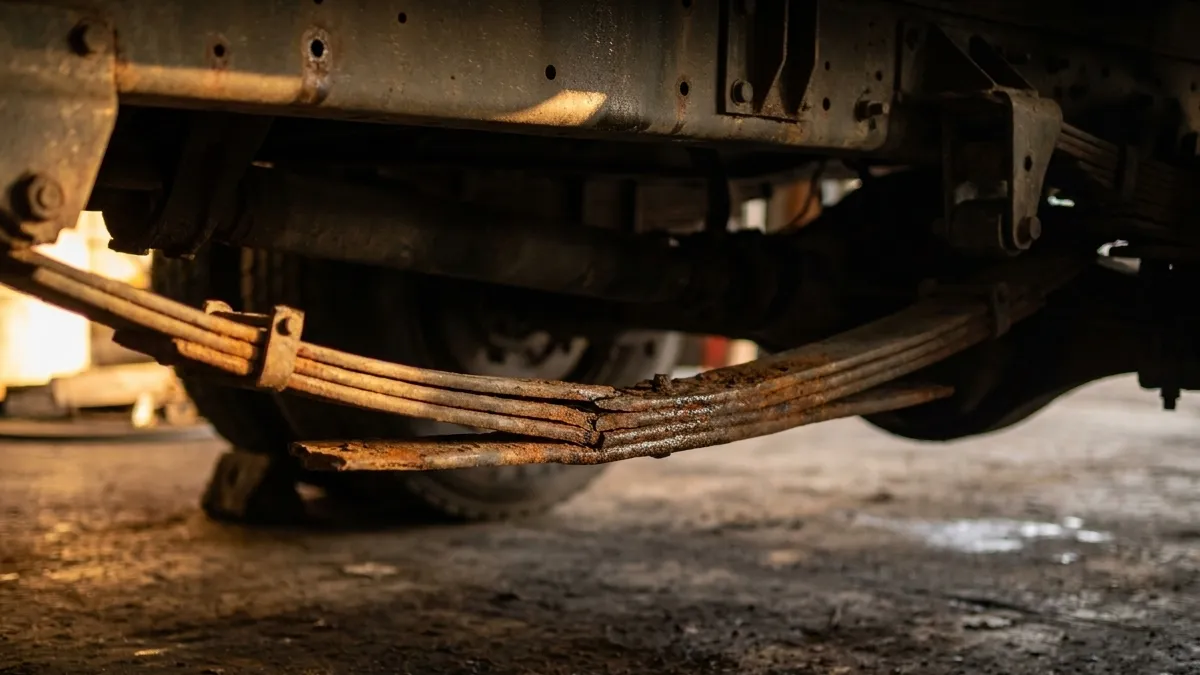
A leaf spring is a stack of curved steel strips clamped together. It carries the load, locates the axle, and absorbs shock, all with no moving parts that can leak or fail electrically. It is the oldest suspension design still in mass use, for good reason.
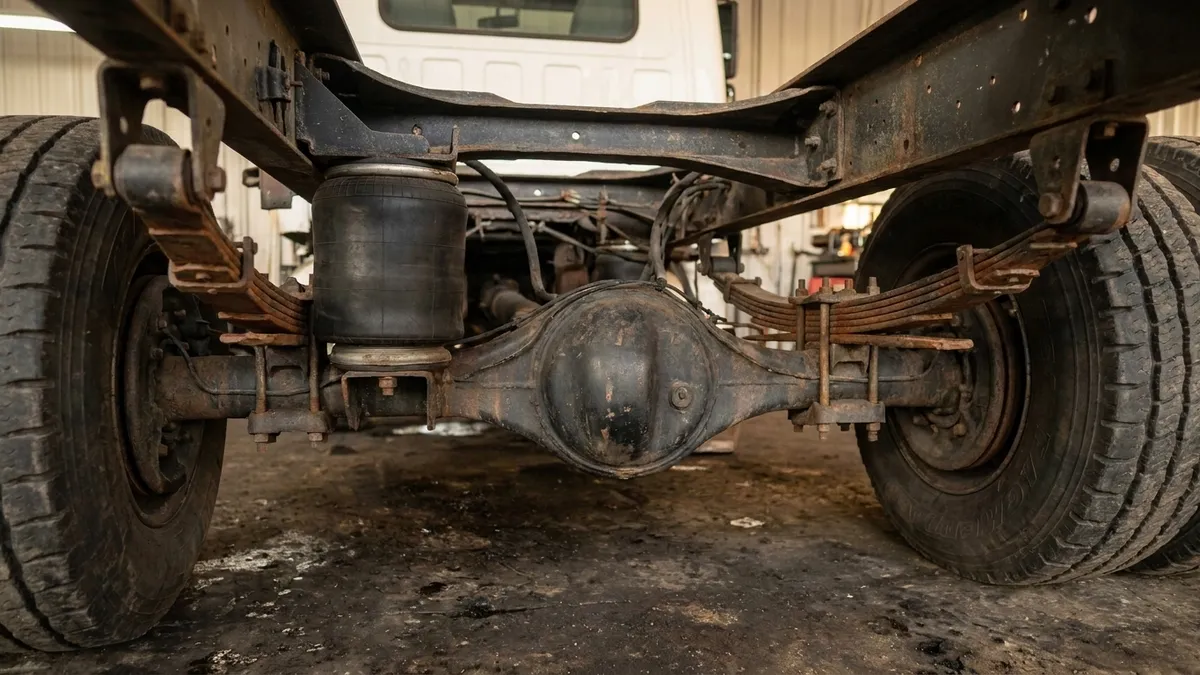
Air suspension replaces the steel with rubber bellows filled with compressed air, fed by a compressor and controlled by valves and levelling sensors. The system holds the vehicle at a set ride height whatever the load.
Where air suspension genuinely wins
- Ride quality. Not close. Air is far smoother, empty or loaded.
- Cargo protection. If you carry glass, electronics, furniture or livestock, that smoothness is the whole point.
- Constant ride height. Useful for loading docks and for trailers that must sit level.
- Driver comfort. On long-distance work this matters more than owners think.
If your vehicle carries fragile cargo or runs long highway distances, air suspension is the right system and we would tell you to keep it.
Where leaf springs win
- Load capacity. A properly specified leaf pack carries more weight, more reliably, than an equivalent air setup.
- Nothing to leak. No bellows, no compressor, no valve block, no air lines, no levelling sensor.
- Heat and dust. UAE summer heat and construction-site dust are hard on rubber bellows and air lines. Steel does not care.
- Repair cost and time. A broken leaf is a known job with parts on the shelf. A failed air system can mean diagnosis time, an imported part, and a truck standing.
- Rough ground. On sites, quarries and unpaved yards, leaf springs take abuse that shortens the life of an air system considerably.
The real comparison
| Leaf spring | Air suspension | |
|---|---|---|
| Ride comfort | Firm | Much better |
| Maximum load | Higher | Lower |
| Parts that can fail | Very few | Many |
| Repair turnaround | Usually same day | Depends on the part |
| Handles heat and dust | Very well | Less well |
| Rough ground | Very well | Wears faster |
| Best suited to | Heavy loads, sites, tipper and construction work | Fragile cargo, long highway runs |
So when does conversion make sense?
Converting from air to leaf spring is worth it when most of these are true of your vehicle:
- It carries heavy, robust loads — sand, aggregate, steel, machinery, containers
- It works on sites or unpaved ground rather than only highways
- The air system has already failed more than once
- Downtime costs you more than ride comfort is worth
- You want a suspension your own drivers can spot problems in before they become failures
If your truck is a highway unit carrying delicate freight, do not convert it. Fix the air system. We will say so.
What the conversion involves
It is not a bolt-on. Done properly it means:
- Removing the bellows, compressor feed, valves and levelling linkage
- Fabricating and welding spring hangers and shackle brackets to the chassis
- Fitting a leaf spring pack specified for the weight the vehicle actually carries — not the weight on the paperwork
- Setting ride height and axle position so the vehicle sits and tracks correctly
- A full wheel alignment afterwards, because axle geometry has changed
That last step gets skipped by cheaper workshops, and it is why some converted trucks eat tyres afterwards. Alignment is part of the job, not an extra.
Talk it through first
Tell us what the vehicle carries, where it runs, and what the air system has cost you so far. That conversation takes five minutes and will tell you more than any article. See air suspension conversion for what the work covers.